10 Signs It's Time to Retire Your Spreadsheet Budget
· Updated
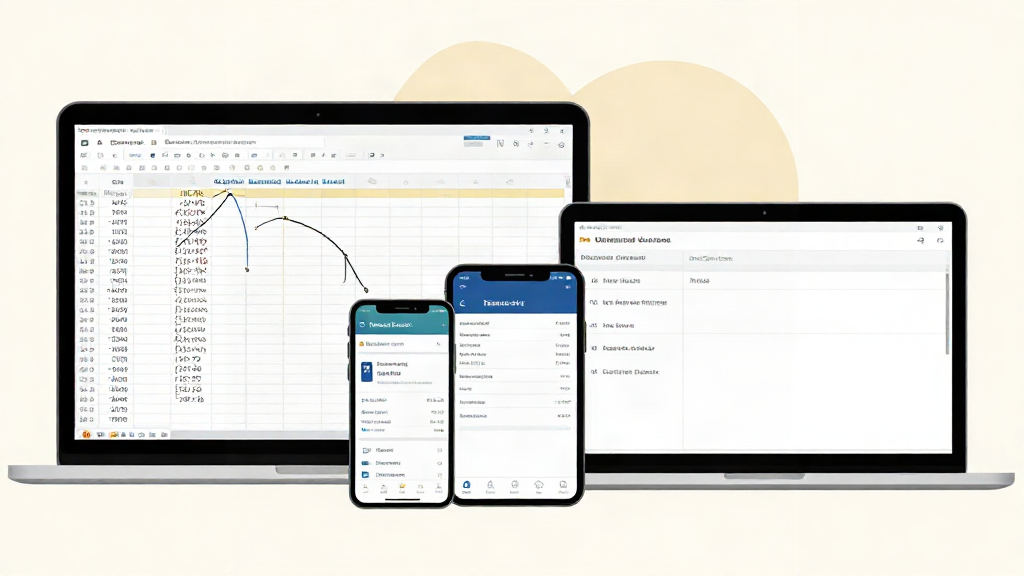
Spreadsheets are wonderful things. They are free, familiar, and endlessly flexible. For years, they have been the quiet backbone of household budgeting - a faithful old notebook that never asks for a subscription.
But there comes a point where the tool you loved starts working against you. The formulas multiply, the tabs sprawl, and the file you once opened with confidence now feels like a second job. If any of the ten signs below sound familiar, it may be time to retire your spreadsheet budget and move to a proper home for your money.
1. You dread opening it
When budgeting feels like admin, you stop doing it. If you find yourself putting off a five-minute update for a fortnight, that is not a discipline problem - it is a sign that your system has become heavier than the habit it was meant to support. A good budget should lower your shoulders, not raise them.
2. The formulas have started lying to you
A single broken reference or an overwritten cell can quietly corrupt a whole month of totals. You spot it weeks later, usually when a figure looks "off" and you cannot say why. Spotting manual errors is exactly the kind of work you should never have to do. A dedicated personal finance app calculates for you, so the numbers are right the first time.
3. You find out about problems too late
A spreadsheet only tells you what you already typed into it. If the balance is wrong, it stays wrong until you sit down and reconcile it. By then, an overspend has already happened. Modern budgeting tools update as your accounts change, so you see the picture as it stands - not as it stood three weeks ago.
4. One file, one device, no sync
Your budget lives on the laptop in the study. Your spending happens on your phone, in the supermarket, on the bus. Every gap between the two is a gap in the record. If you have ever texted yourself a receipt to "add later", you already know the system is cracking.
5. You are the only person who understands it
Households share money. Spreadsheets rarely share well. Custom formulas, personal shorthand and a colour-coding scheme known only to you make the family budget a solo project. When two people cannot both read the file, both stop using it. Shared, cloud-based access changes that - everyone sees the same numbers, on whatever device is to hand.
6. Bills slip through the cracks
Standing orders, annual insurance, that subscription you meant to cancel - a spreadsheet only reminds you if you remember to check it. Recurring bill reminders do the remembering for you, so nothing creeps past because it arrived on a busy Tuesday.
7. You think in tabs, not in answers
"How much did we spend on food last quarter?" should not require opening six tabs and hunting for a SUM range. When a simple question needs five minutes of archaeology, your spreadsheet is storing data rather than telling you anything. Detailed reports turn the same numbers into answers in a click.
8. You archive instead of analyse
Many spreadsheet budgets are really archives - careful records of what already happened. Useful, but backwards-looking. The value of budgeting is in what it helps you decide next: where to trim, what to save, what is coming. If your file never helps you look forward, it is doing half a job.
9. You have stopped trusting the numbers
This is the quiet one. When you are not sure the totals are right, you start making decisions on instinct instead. Trust is the whole point of tracking your money. Once a system needs auditing before it can be believed, its day is done.
10. You cannot see what is coming
One-off costs, irregular income, the quiet months before a big bill - these are hard to hold in your head and fiddly to model by hand. Cash flow forecasting shows the next few months at a glance, so a tight week or a large expense stops being a surprise.
What a dedicated app does differently
None of these are reasons to feel bad about your spreadsheet. They are simply signs that you have outgrown a general-purpose tool. A purpose-built personal finance app replaces the manual effort with three things a spreadsheet was never designed to give you: automation, sync across every device, and reminders that keep working when you are not.
ThriftyOwl is built for exactly this upgrade. It is a free, cloud-based budgeting app - the kind of modern home that long-time spreadsheet and Microsoft Money users are looking for. You get multi-account management, smart budgeting, cash flow forecasting, recurring bill reminders and detailed reports, whether you are on your phone, tablet or desktop.
And because your finances deserve the same care as your other accounts, ThriftyOwl keeps things simple and honest. There are no ads, ever. Your data stays yours. Security is bank-grade throughout, so moving off the spreadsheet does not mean moving into something you have to worry about.
And you do not have to retype anything to make the move. If your budget is a list of transactions, ThriftyOwl imports CSV files and Excel workbooks directly. It works out which column is the date, the payee and the amount, shows you what it found, and lets you correct it before anything comes across. A workbook with several tabs can come across as several accounts. Our guide to when a spreadsheet stops being enough walks through the move step by step.
Ready to close the old file?
Start with one honest question: does your budget still save you time, or cost you it? If the answer has quietly flipped, that is all the signal you need. You do not have to delete the spreadsheet today - keep it as a reference if you like. But give your money a system that keeps up with you, on every device, without the formulas fighting back.
Take control of your finances, from anywhere. Your future self - the one who no longer reconciles tabs on a Sunday - will thank you.
Sources and further reading
- Raymond R. Panko, "Spreadsheet Errors: What We Know. What We Think We Can Do" - a review of research showing spreadsheet errors are common and non-trivial.
- Bradley and McDaid, "Error Estimation in Large Spreadsheets using Bayesian Statistics" (EuSpRIG 2009) - why error rates in large spreadsheets can be high.